Waterjet Solutions
How Does Warterjet Pump Working?
How Does Warterjet Pump Working?
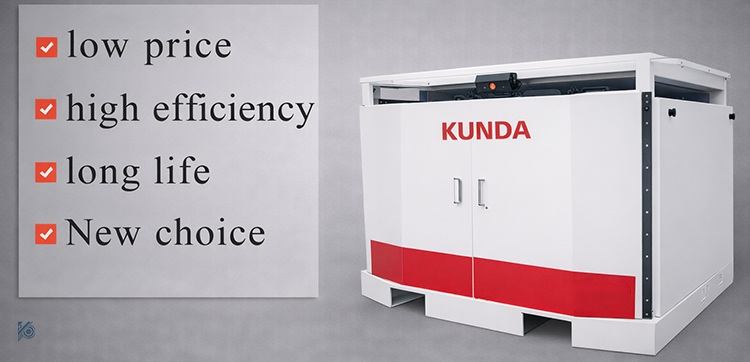
Simply put, waterjet cutting technology utilizes water as a cutting tool; within modern industry, it is a highly sought-after technique. Its key strengths lie in its exceptional cutting precision, its ability to cut without generating heat that could compromise the material, and its remarkable versatility across various substances. Consequently, it finds widespread application in fields such as metal fabrication, stone cutting, glass processing, and the manufacturing of composite materials. At the heart of this entire system—acting much like its engine—is the Waterjet Pump, which provides the robust power required for the operation.
So, how exactly does a Water Jet Cutter Pump function? Today, let’s take a deep dive into its operating principles, internal structure, and practical applications.The 37Kw Waterjet Pump: The Generator of High-Pressure Water
You can visualize the waterjet pump as a "water pressure booster"—a device capable of instantly elevating ordinary water pressure to an extraordinarily high level. Driven by an internal hydraulic system, it can boost water pressure to staggering levels ranging from 300 MPa to 420 MPa—a force that is certainly not to be taken lightly.When this intensely high-pressure water is forced through a minuscule nozzle, it forms a high-velocity waterjet stream. If this stream is further augmented with abrasive particles—such as garnet sand—its cutting power becomes even more formidable, enabling high-precision cutting across a vast array of materials.
Operating Principles of AdjuStable Pressure Waterjet Pump:
The core technology behind the Water Jet Cutting Pump is hydraulic intensification. The entire process can be broken down into several distinct stages:1. Hydraulic System Drive: First, an electric motor activates the hydraulic system. The hydraulic pump pressurizes hydraulic fluid, which then drives a hydraulic piston to move back and forth. This hydraulic system acts as the "engine" of the waterjet pump, providing a steady and reliable source of power.
2. Pressure Intensification:Inside the waterjet pump, there are two pistons: one large and one small. The larger piston is the hydraulic piston, while the smaller one is the high-pressure water piston. When the hydraulic fluid pushes the large piston into motion, the smaller piston generates immense pressure—a phenomenon known as pressure amplification. Simply put, the pressure exerted on the smaller piston is many times—often dozens of times—greater than that on the large piston, thereby generating ultra-high-pressure water. This specific process is referred to as pressure intensification.
3. High-Pressure Water Output:The newly intensified, high-pressure water is then channeled into a high-pressure piping network. From there, it passes through a component known as an accumulator, which serves to stabilize the pressure and prevent any fluctuations or surges. Subsequently, the high-pressure water flows into the cutting head and is ejected through a tiny gemstone nozzle, forming a high-velocity water jet.
4. Abrasive Addition:When cutting harder materials—such as metals or stone—the system introduces an abrasive agent (typically garnet sand) at the nozzle. This abrasive mixes with the high-velocity water stream to create an Abrasive Water Jet with immense cutting power. This jet possesses exceptional cutting capability, allowing it to effortlessly cut through materials such as stainless steel, aluminum alloys, stone, glass, ceramics, and composite materials.
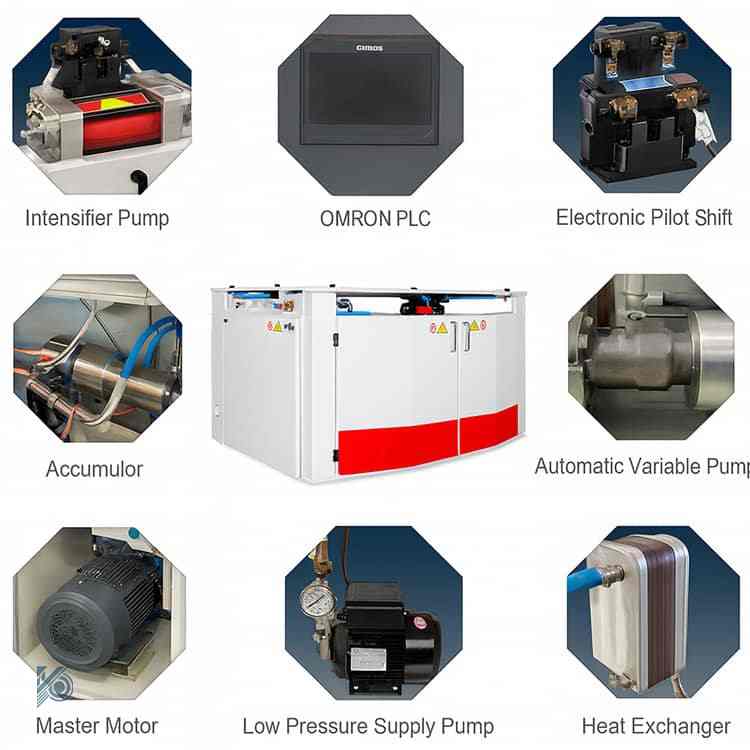
Key Components of 4000 Bar Waterjet Pump:
A complete waterjet pump typically consists of the following key components:1. Hydraulic Power System:Acting like an engine, this system provides the driving force necessary to sustain the pressure-boosting process.
2. Intensifier Cylinder:This is the core component responsible for pressure amplification; it converts hydraulic pressure into ultra-high-pressure water.
3. High-Pressure Sealing System:Designed to maintain effective sealing integrity within a high-pressure environment, thereby preventing leaks.
4. Check Valve System:Controls the direction of water flow, ensuring a stable and consistent output of high-pressure water.
5. Control System:Used to regulate pressure and operational status, as well as to manage safety protection functions.
Advantages of Water Jet Intensifier Pump:
Waterjet Pumps offer numerous advantages within the industrial manufacturing sector:1. Ultra-High Pressure Output:Capable of delivering a stable stream of ultra-high-pressure water, thereby ensuring high cutting efficiency.
2. Versatile Material Compatibility:Can cut through almost any material, including metals, stone, glass, composite materials, and more.
3. Cold Cutting Technology:Generates no heat during the cutting process, thereby preventing material deformation or thermal damage.
4. High-Precision Machining:Enables the cutting of complex shapes and allows for highly precise machining operations.
5. Eco-Friendly Processing:Produces no dust, smoke, or harmful gas emissions.
Application Industries of 4137 Bar Waterjet Pump:
Custom Waterjet Pump are utilized across a wide range of industries: metal processing, stone processing, the glass industry, aerospace, automotive manufacturing, and composite material processing.Overall, waterjet pumps play an increasingly vital role in industrial production.
As the core component of a Waterjet Cutting System, the waterjet pump employs hydraulic intensification technology to transform ordinary water pressure into an ultra-high-pressure water jet, thereby enabling efficient and precise material cutting. As technology continues to advance, future Waterjet Cutting Pumps will see continuous improvements in efficiency, stability, and intelligence, providing modern manufacturing with more advanced cutting solutions.