Waterjet Knowledge
How to Choose the Right Waterjet Orifice and Nozzle Combination?
How to Choose the Right Waterjet Orifice and Nozzle Combination?
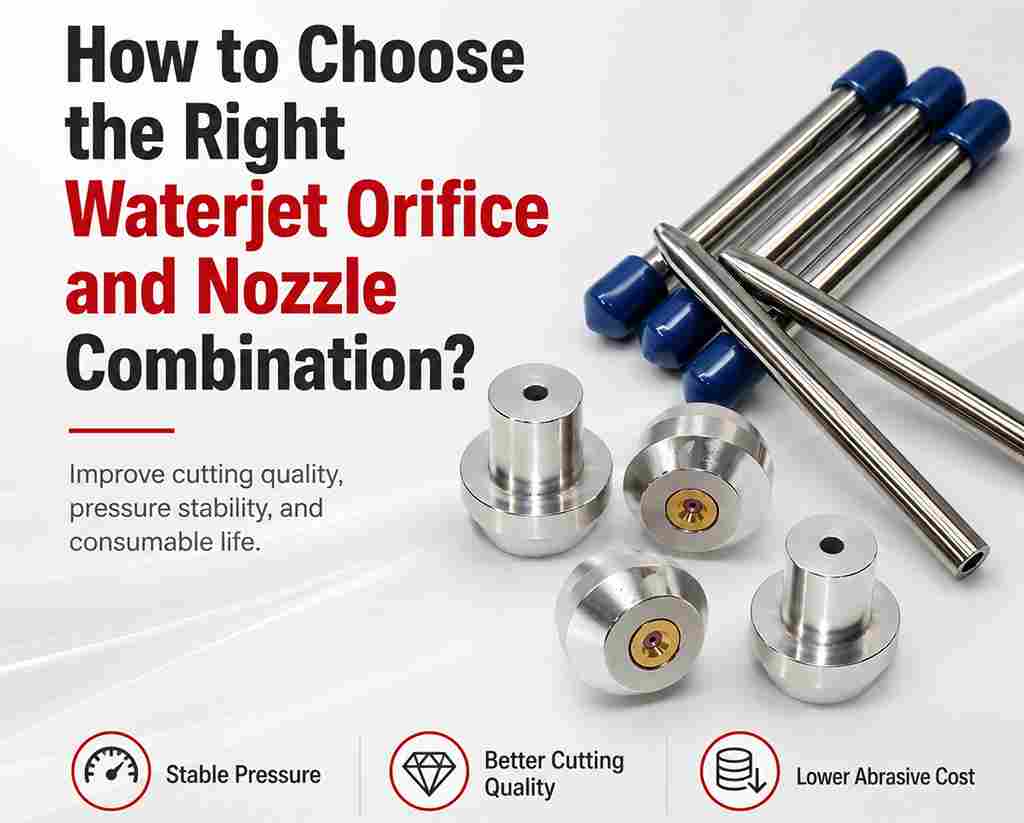
In Abrasive Water Jet cutting, the combination of the nozzle hole and the nozzle plays a very important role in cutting performance, abrasive consumption, pump load, cutting speed, and final edge quality.
Many water jet users mainly focus on the pump pressure or the size of the equipment, but in daily production, the correct nozzle hole diameter and nozzle matching will directly affect the operating cost and cutting stability. If the nozzle hole diameter is too large, the pump may not be able to reach a stable pressure; if the nozzle matching is improper, the abrasive mixing efficiency will decrease, the cutting quality will decline, and the wear rate of the consumables will increase.
Choosing the appropriate water jet nozzle hole diameter and nozzle combination not only depends on the size, but also should be based on the pump capacity, working pressure, material type, material thickness, cutting speed, abrasive flow rate, and the required cutting quality.
KUNDA provides nozzle holes, Focusing Tubes, Abrasive Nozzles, cutting head components, pump components, and compatible water jet spare parts for a variety of mainstream Water Jet Systems. This article will introduce how to select the appropriate nozzle hole and nozzle combination to improve the water jet cutting performance.
What Is a Waterjet Orifice?
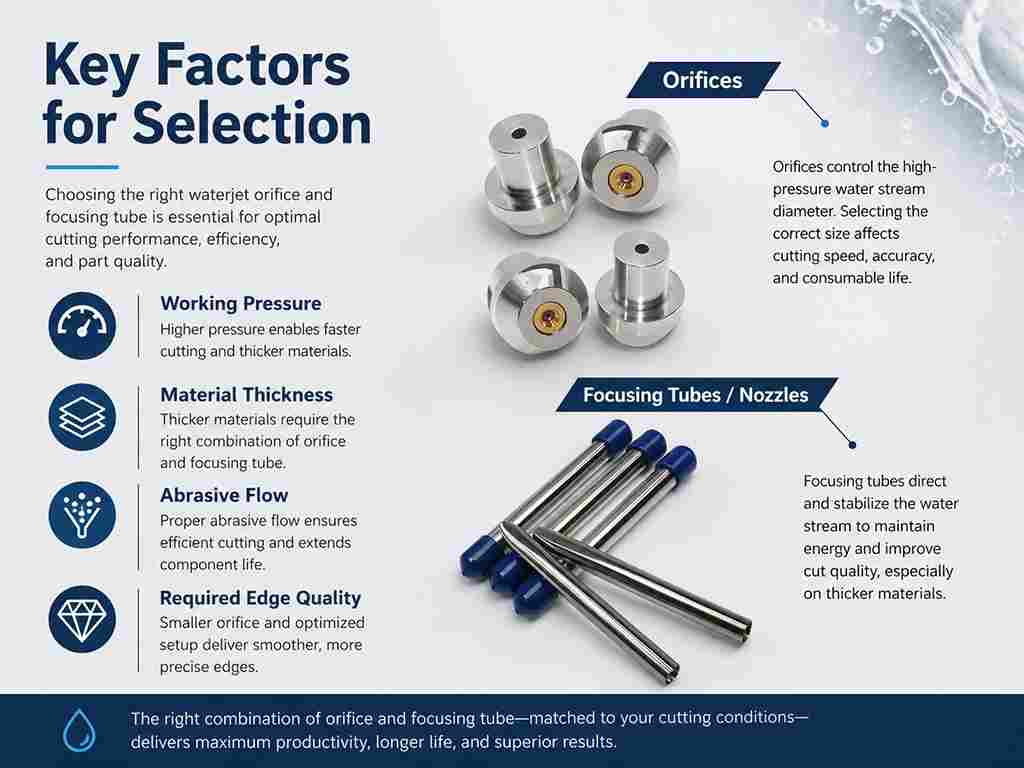
The water jet nozzle is a small and precise component used to convert high-pressure water into high-speed water flow. It is usually installed inside the cutting head. The nozzle is one of the most critical consumables in water jet cutting. Its diameter affects: Water flow speed Pump load Cutting pressure Cutting speed Grinding material mixing efficiency Cutting flow stability Total operating cost Common orifices include ruby, sapphire and diamond. The wear resistance and service life of different materials vary.
What Is a Waterjet Nozzle or Focusing Tube?
In sandblasting water jet cutting, the nozzle is usually referred to as a focusing tube or a Mixing Tube. After the high-pressure water passes through the orifice, the abrasive is sucked into the mixing chamber and accelerated through the focusing tube. The focusing tube helps to form a high-concentration abrasive water jet, which is used for cutting hard materials such as metals, stones, ceramics, glass, and composites. The focusing tube affects: Abrasive acceleration Cutting flow concentration Cutting edge width Front quality Cutting speed Nozzle lifespan Abrasive consumption If the focusing tube is worn or not properly matched, the cutting flow may become dispersed, resulting in poor cutting quality and increased material waste.
Why Orifice and Nozzle Matching Matters
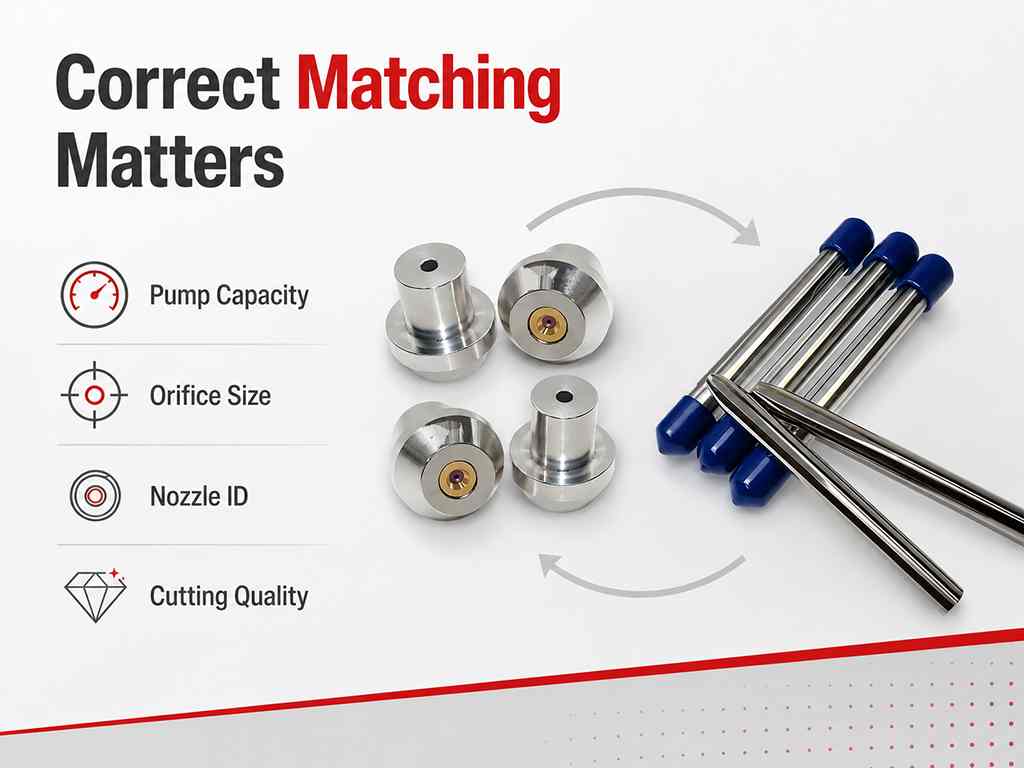
The nozzle and orifice must work together. A good combination helps the pump maintain a stable pressure and enables the abrasive material to be efficiently mixed with the water flow. If the combination is incorrect, customers may encounter the following problems: Decreased pump pressure Unstable cutting flow Excessive consumption of abrasive material Poor edge quality Wider gaps Short nozzle lifespan Inability to cut materials Higher production costs More frequent maintenance Therefore, water jet users should not randomly choose nozzles and orifices. The correct combination must be matched with the entire water jet cutting system.
1. Match the Orifice Size with Pump Capacity
The first step is to confirm whether the pump can support the selected aperture size. A larger aperture can increase the water flow, but it also requires a greater pump power. If the aperture is too large and the pump's power is insufficient, the pump may not be able to maintain the target pressure, resulting in pressure loss, reduced cutting speed, and unstable performance. Before choosing the aperture, the customer should consider: The pump's power Maximum working pressure Flow capacity Number of cutting heads Required cutting speed Daily working hours For example, if the Water Jet Equipment uses a smaller pump, choosing an overly large aperture may cause the pump to overload and reduce cutting stability. An appropriately sized aperture helps maintain pressure and improve the pump's efficiency.
2. Choose the Nozzle Size According to the Orifice
The size of the nozzle or focusing tube should match the aperture. Generally speaking, the inner diameter of the focusing tube should be larger than the nozzle aperture to ensure sufficient space for abrasive mixing and acceleration. If the nozzle is too small, it may restrict the flow of abrasive fluid; if the nozzle is too large, the cutting fluid may lose its concentration. The appropriate nozzle size helps to achieve: Stable abrasive mixing Better cutting fluid focusing Smooth edges and excellent texture Reasonable abrasive consumption Longer nozzle lifespan KUNDA can assist customers in checking the appropriate nozzle or aperture combination based on machine model, pump pressure and cutting material.
3. Consider Material Type and Thickness
Different materials require different cutting energies, and the appropriate aperture and nozzle combination should be selected based on the material being cut. For thin materials, a smaller aperture and nozzle might be sufficient. This can reduce the consumption of water and abrasive while maintaining the cutting quality. For thicker or harder materials, the customer may need a larger aperture and nozzle combination to provide stronger cutting force. However, the pump must have sufficient capacity to support this configuration. Common materials include: Stainless steel Carbon steel Aluminum Titanium Marble Granite Ceramic tiles Glass Rubber Composite materials The harder or thicker the material is, the more it is necessary to balance the cutting speed, abrasive flow, pressure stability and the lifespan of the consumables.
4. Control Abrasive Flow Rate
The wear of abrasive materials is one of the main costs in water jet cutting. The combination of nozzles and holes directly affects the usage of abrasive materials. If the nozzle and the hole are not matched properly, the abrasive material may not be accelerated sufficiently, resulting in waste and poor cutting performance. Excessive abrasive material does not necessarily mean a faster cutting speed. In many cases, excessive use of abrasive material will only increase costs and may accelerate nozzle wear. The correct combination helps customers control: Erosive flow Cutting efficiency Edge quality Nozzle wear Operating costs KUNDA can provide suggestions for abrasive nozzle selection and consumable matching based on the customer's cutting application.
5. Check Cutting Quality Requirements
The requirements for cutting quality vary from one customer to another. Some customers need rapid rough cutting, while others demand smoother edges and higher precision. If high precision cutting is required, customers should choose a combination that can provide a stable and concentrated cutting flow. Worn nozzles or mismatched combinations may result in conical shapes, rough edges, or poor precision. To achieve precise cutting, customers should pay attention to: O-ring condition Nozzle wear Grinding material quality Pump pressure stability Cutting speed Alignment of the cutting head Material thickness A good combination of the o-ring and nozzle helps reduce secondary processing and improve the quality of the finished product.
6. Replace Worn Orifices and Nozzles on Time
Even if the original combination is correct, the nozzles and orifices will still wear out during use. Once worn out, the cutting performance will decline. Signs of nozzle or orifice wear include: Wider cuts Coarse machined edges Unstable cutting flow Lower cutting speed Higher abrasive consumption Poor cutting accuracy Finer cut edges Difficult to penetrate the material Regular inspections and timely replacements help maintain the efficient operation of the water jet equipment.
7. Do Not Only Choose by Price
Some customers only choose the orifices and nozzles based on the price. However, inferior consumables may wear out rapidly, reduce the cutting stability, and increase the total production cost. High-quality consumables should have stable performance, correct dimensions, reliable materials, and consistent service life. Choosing the appropriate orifices and nozzles helps to reduce: Downtime Grinding waste Material waste Redo Frequent replacements Long-term maintenance costs For water jet users, stable performance is often more important than the lowest purchase price.
Common Waterjet Orifice and Nozzle Combination Problems
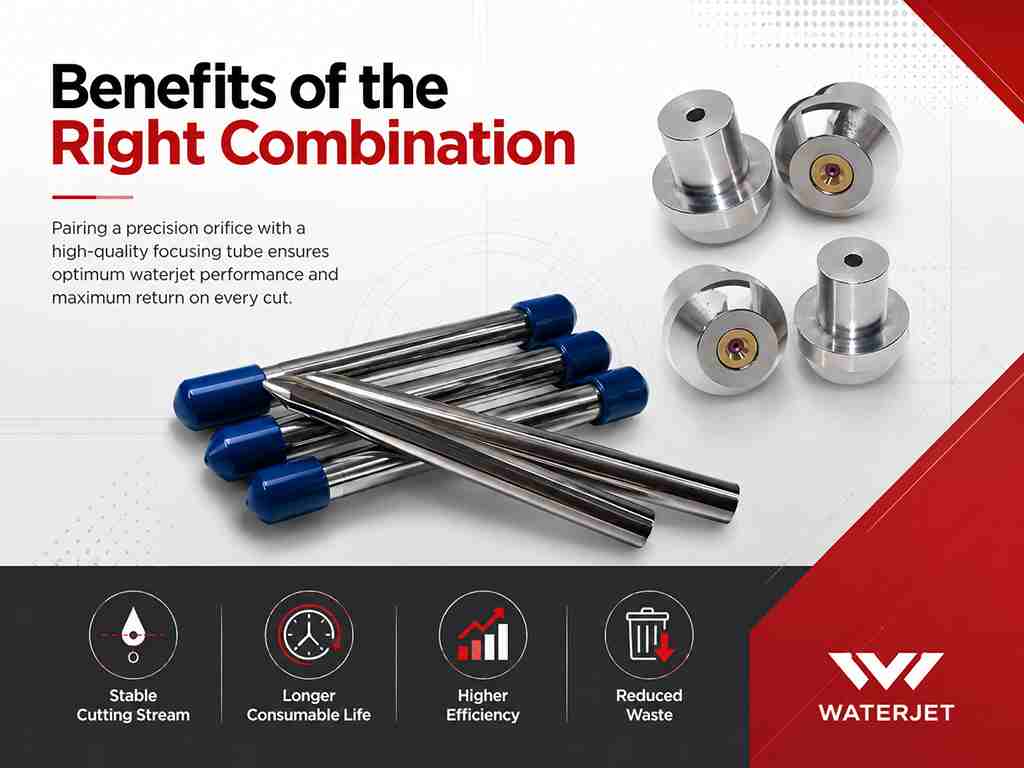
When the combination is not suitable, customers may encounter various problems. Common issues include: The pump fails to reach the required pressure The cutting flow is not straight The abrasive supply is unstable The nozzles get clogged frequently The cutting speed is too slow The edge quality is poor The nozzles wear out too quickly The material cannot be cut The cutters have widened When these problems occur, customers should simultaneously check the hole diameter, nozzle size, pump capacity, abrasive flow rate and cutting pressure.
How KUNDA Helps Customers Choose the Right Combination
KUNDA provides water jet consumables and spare parts to global customers. We can assist customers in selecting the appropriate nozzle and nozzle hole combinations based on their actual production needs.
KUNDA supplies: Ruby holes Sapphire holes Diamond holes Focusing tubes Abrasive nozzles Mixing chambers Cutting head components Switch valve components Water Jet Pump components High-pressure seals Sealing kits Compatible with various brand accessories
KUNDA also offers compatible replacement parts for multiple water jet brands, including FLOW, KMT, OMAX, AccuStream, BFT, WSI, Resato, Techni, and other water jet systems.
If customers are unsure which holes or nozzles they need, they can send us: Machine brand Pump model Cutting head type Work stress Current aperture size Current nozzle size Cutting material Material thickness Cutting quality requirements Old part photos or part number Our team will assist in screening suitable options and provide practical solutions.
Selecting the appropriate combination of water jet nozzles and nozzles is crucial for achieving stable cutting performance and reducing production costs.
The suitable combination helps maintain pump pressure, improve abrasive mixing effect, reduce material waste, enhance edge quality, and extend the nozzle lifespan.
Customers should choose the aperture size and nozzle dimensions based on the pump's capacity, pressure, material type, material thickness, erosion flow rate, and cutting quality requirements.
KUNDA provides reliable water jet nozzles, focusing tubes, cutting head components, pump components, and compatible spare parts to global customers.
If you need help choosing the appropriate combination of water jet nozzles and nozzles, please send your equipment model, pump model, cutting material, material thickness, and current consumable size to KUNDA. We will assist you in confirming the appropriate solution.

FAQ: Waterjet Orifice and Nozzle Combination
1. Why is the orifice and nozzle combination important in waterjet cutting?
The orifice and nozzle combination affects pump pressure, water flow, abrasive mixing, cutting speed, edge quality, and operating cost. A correct combination helps the machine cut more efficiently and reduces unnecessary consumable waste.
2. What happens if the orifice is too large?
If the orifice is too large for the pump capacity, the pump may not maintain the required pressure. This can cause pressure loss, slower cutting, unstable cutting performance, and higher operating cost.
3. What happens if the nozzle is too large?
If the nozzle is too large, the cutting stream may lose concentration. This can lead to lower cutting efficiency, wider kerf, poor edge quality, and more abrasive waste.
4. What happens if the nozzle is too small?
If the nozzle is too small, abrasive flow may be restricted or unstable. This can cause poor abrasive mixing, nozzle blockage, reduced cutting performance, and faster wear.
5. How do I know which orifice size to choose?
The orifice size should be selected according to pump power, working pressure, water flow capacity, number of cutting heads, cutting speed, and material thickness. Customers can send machine and pump information to KUNDA for matching support.
6. How do I choose the right focusing tube size?
The focusing tube size should match the orifice size and abrasive flow requirement. It should allow stable abrasive mixing and keep the cutting stream focused. The best size depends on the pump pressure, material, thickness, and cutting quality requirement.
7. Can the wrong orifice and nozzle combination cause pump pressure loss?
Yes. If the orifice is too large or not suitable for the pump capacity, the pump may fail to reach or maintain target pressure. This is one common reason for pressure problems in waterjet cutting.
8. How often should waterjet orifices and nozzles be replaced?
Replacement frequency depends on working pressure, abrasive quality, cutting time, water quality, material type, and consumable quality. If cutting quality becomes poor, kerf becomes wider, or the cutting stream becomes unstable, customers should inspect and replace worn parts.
9. Does abrasive quality affect nozzle life?
Yes. Poor-quality abrasive may contain dust, impurities, or uneven particles, which can cause nozzle blockage, faster wear, and unstable cutting performance. Good abrasive selection helps extend nozzle life and improve cutting quality.
10. Can KUNDA help choose compatible orifices and nozzles?
Yes. KUNDA can help customers choose suitable waterjet orifices, focusing tubes, abrasive nozzles, and cutting head parts according to machine brand, pump model, working pressure, cutting material, and part numbers.