Waterjet Knowledge
How to Choose the Right Waterjet Seal Kit?
How to Choose the Right Waterjet Seal Kit?
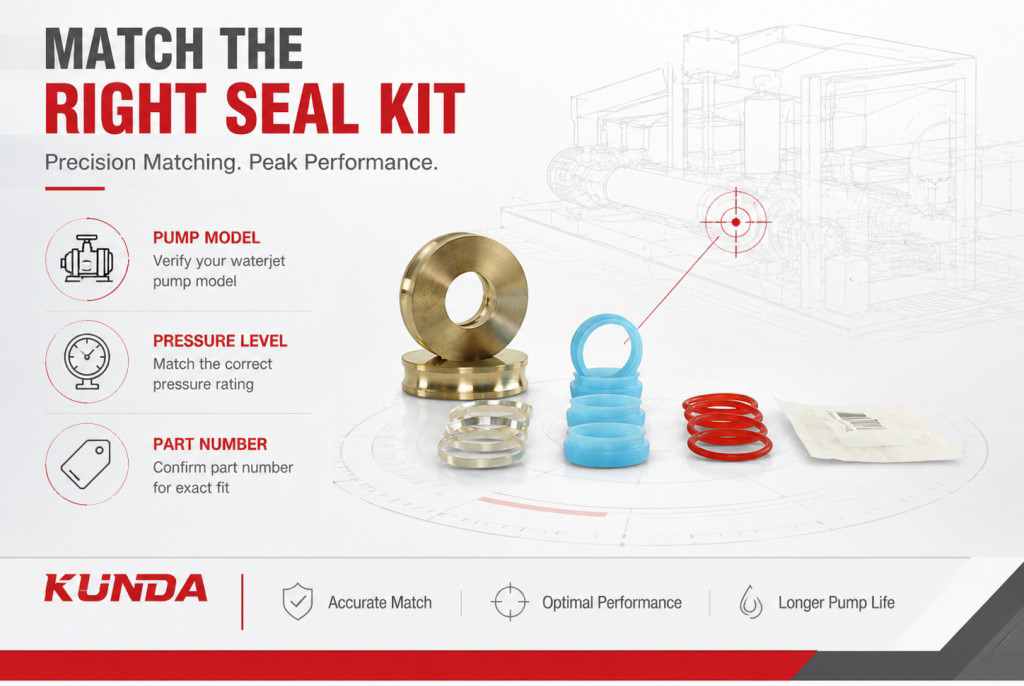
However, many customers face a common challenge: while seals may appear simple, an incorrect choice can lead to pressure loss, reduced service life, frequent repairs, leakage, and unnecessary downtime.
So, how should customers select the right waterjet seal kit? It involves more than just price. Customers should also consider factors such as the pump brand and model, pressure rating, water quality, condition of the ceramic plunger, installation method, and part number compatibility.
Why Is the Waterjet Seal Kit Important?
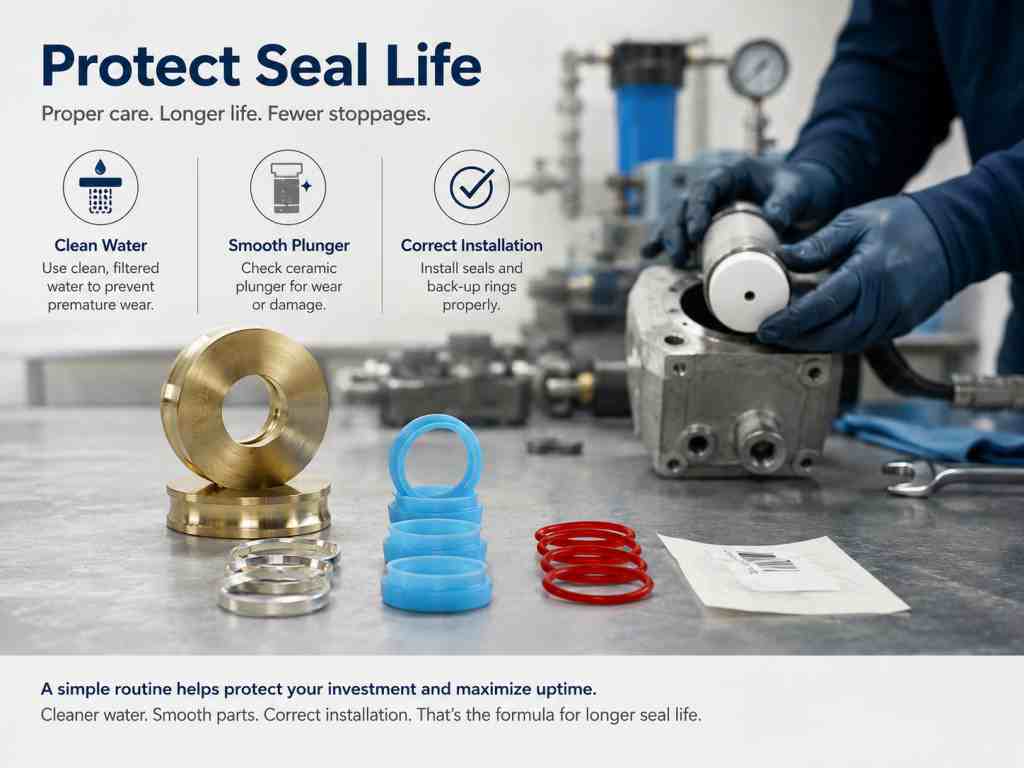
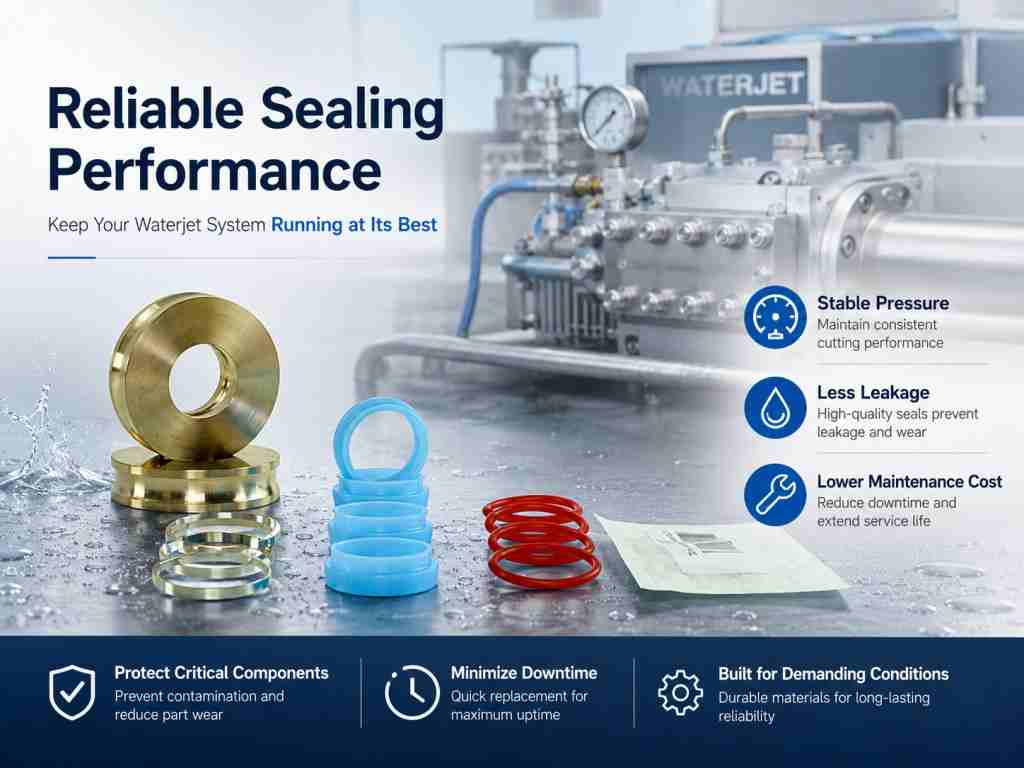
If seal kits are worn, damaged, or incompatible with the pump, the equipment may experience issues such as water leakage, drops in pump pressure, pressure fluctuations, shortened seal lifespan, degraded cutting quality, frequent downtime, and increased maintenance costs.
For facilities that use Waterjet Equipment daily, the quality and compatibility of seal kits directly impact production stability.
1. Confirm the Pump Brand and Model
The first step is to confirm the pump brand and model.Different types of Waterjet Pumps utilize distinct sealing structures, dimensions, and materials. Even if two seal kits look similar, they may not be suitable for the same pump.
Before ordering a seal kit, customers should have the following information ready: pump brand, pump model, operating pressure, part number, photos of the old seals, and the equipment nameplate.
With this information, KUNDA can assist customers in verifying the correct seal kit, thereby minimizing the risk of purchasing the wrong product.
2. Check the Working Pressure
Waterjet pumps operate at various pressure ratings, such as 40,000 psi, 60,000 psi, 90,000 psi, or higher.Seal assemblies must match the pump's pressure rating. If a seal is not suitable for the specific operating pressure, it may fail shortly after installation.
Selecting the appropriate seal assembly helps customers achieve: more stable pump pressure, longer seal service life, reduced leakage risk, superior cutting performance, and fewer needs for unplanned maintenance.
Customers should not select seal assemblies based solely on appearance or low price; pressure compatibility is crucial.
3. Check the Ceramic Plunger Condition
Many customers attribute short seal service life solely to the quality of the seal itself. In reality, the condition of the ceramic plunger significantly impacts seal longevity.Seals work in close contact with the ceramic plunger. If the plunger has scratches, cracks, wear, or adhered debris, it can rapidly damage the new seal assembly.
Before installing a new seal assembly, customers should inspect the ceramic plunger for issues such as surface scratches, cracks, rough areas, uneven wear, chipped edges, or adhered contaminants.
If the ceramic plunger is damaged, simply replacing the seal assembly may not solve the problem. In some cases, the ceramic plunger should be replaced along with the seal assembly.
4. Pay Attention to Water Quality
Poor water quality is a common cause of reduced seal service life.If the water contains sand, rust, impurities, or hard particles, these contaminants can enter the pump body and damage sealing surfaces. Furthermore, poor water quality can affect check valve assemblies, ceramic plungers, Nozzle Orifices, and other high-pressure components.
To protect waterjet seal assemblies, users should take measures such as: using appropriate water filtration systems, replacing filter cartridges on schedule, keeping the water supply clean, monitoring water hardness, maintaining stable inlet pressure, and avoiding contaminated or unstable water sources.
Good water quality helps extend the service life of seal assemblies and reduces pump maintenance costs.
5. Choose the Correct Seal Structure
Different pump systems may utilize different seal materials and structures. A suitable seal kit should match the pump's design and actual operating conditions.When making a selection, customers should consider factors such as pump type, pressure rating, daily operating hours, water quality, temperature, maintenance intervals, and installation conditions.
A high-quality seal kit should offer stable sealing performance, precise dimensions, and a reliable service life.
While choosing the lowest-priced seal kit may reduce initial procurement costs, premature failure could ultimately lead to higher overall maintenance expenses.
6. Install the Seal Kit Correctly
Even high-quality seal kits can fail prematurely if installed incorrectly.During installation, customers should ensure: the seals are oriented correctly; the installation area is clean; no dust or metal shavings enter the sealing area; the ceramic plunger surface is smooth; the seals are not scratched or pinched; the correct tools are used; and related pump components are inspected.
Improper installation can lead to leaks, seal damage, unstable pressure, and a shortened service life.
7. Check Related Pump Parts
If the pump still malfunctions after replacing the seal kit, customers should inspect other related pump components.Common related components include: check valve assemblies, ceramic plungers, accumulators, high-pressure cylinders, water filters, hydraulic systems, high-pressure piping, and orifice/nozzle assemblies.
For example, worn check valve assemblies can cause pressure fluctuations; a damaged ceramic plunger can ruin newly installed seals; and poor water supply conditions can also shorten seal life.
Conducting a comprehensive pump inspection is far more effective than repeatedly replacing seals without identifying the root cause.
How KUNDA Helps Customers Choose Waterjet Seal Kits
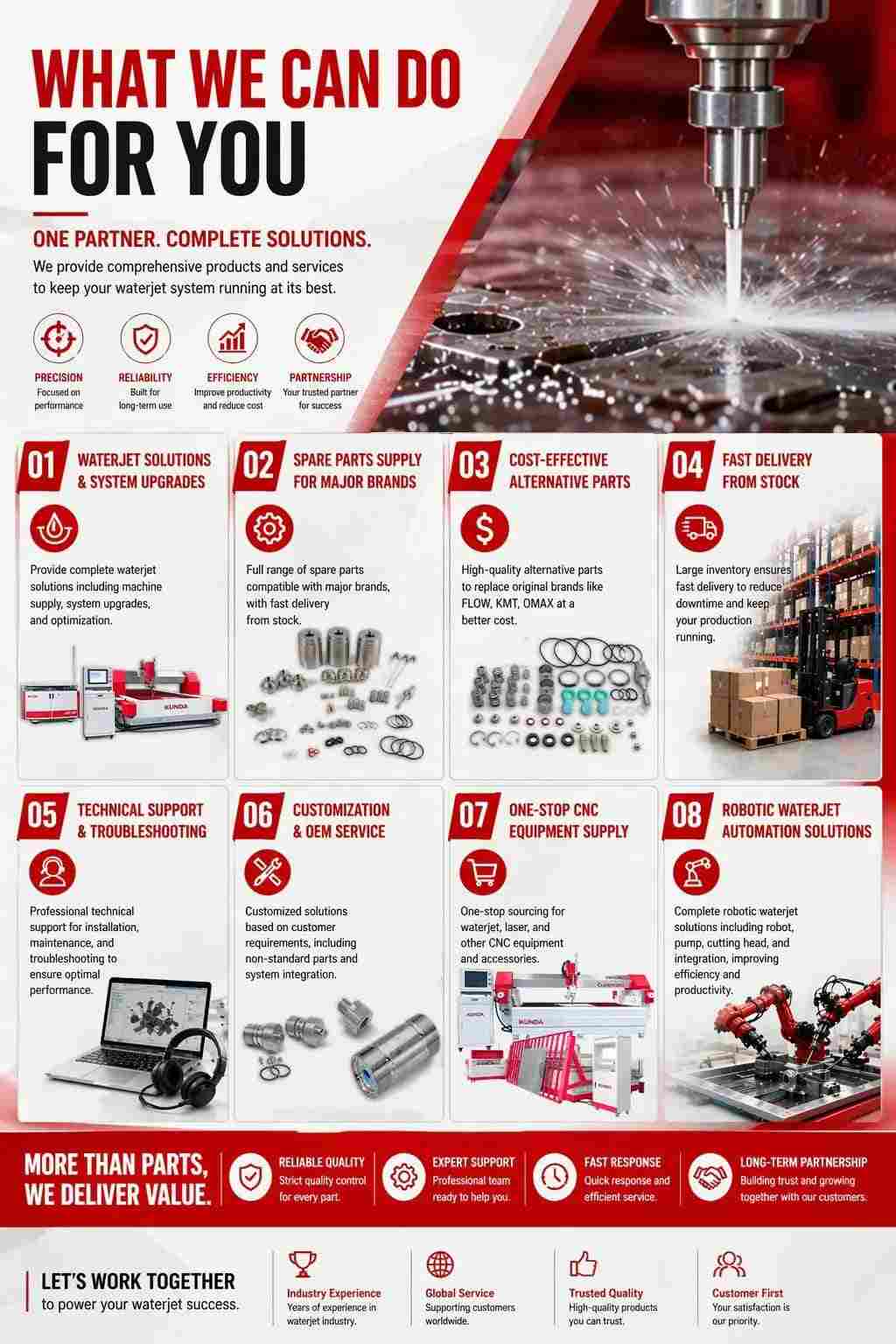
Our waterjet pump parts include: high-pressure seals, seal assemblies, check valve parts, ceramic plungers, accumulators, high-pressure cylinders, intensifier parts, valve components, filters, jewel orifices, Focusing Tubes, and maintenance tools.
KUNDA also offers compatible replacement parts for many mainstream waterjet brands, including systems from FLOW, KMT, OMAX, AccuStream, BFT, WSI, Resato, Techni, and others.
If customers are unsure of the specific seal assembly model required, they can provide information such as the pump model, part number, photos of old seals, equipment nameplate details, operating pressure, or a description of the issue; our team will assist in identifying the correct replacement parts.
Why Choose KUNDA?
When customers contact KUNDA, they receive more than just a price quote. We are committed to helping customers avoid purchasing errors, improve pump operational stability, and reduce long-term maintenance costs. KUNDA offers customers a range of support services, including precise seal kit matching, compatible parts for major brands, cost-effective replacement solutions, rapid delivery, technical consultation, one-stop waterjet parts supply, maintenance advice, and support for minimizing downtime.For waterjet users, selecting the right seal kit supplier helps ensure smooth equipment operation and reduces unnecessary production losses.
Choosing the appropriate waterjet seal kit is crucial for pump performance and production stability.
Before ordering, customers should verify the pump brand, model, pressure rating, condition of the ceramic plunger, water quality, and part numbers. Proper installation and regular maintenance are also key to extending the service life of the seals.
If you require waterjet seal kits or pump maintenance parts, please provide KUNDA with the pump model, part number, photos of the old parts, or a description of the issue, and we will assist you in finding the right solution.
FAQ: Waterjet Seal Kit Selection
1. How do I determine which waterjet seal kit I need?
You can check the pump brand, model, part number, pressure rating, and photos of the old seals. If you are unsure, please send this information to KUNDA for a matching recommendation.2. Can the wrong seal kit cause water leakage?
Yes. If the seal kit's dimensions, structure, material, or pressure rating do not match, it can lead to leaks, pressure loss, or a shortened service life.3. Why do my waterjet seal kits wear out quickly?
Common causes include poor water quality, scratched ceramic plungers, improper installation, full-load operation, pressure fluctuations, or the use of the wrong seal kit.4. Should I check the ceramic plunger when replacing seals?
Yes. A scratched or damaged ceramic plunger can quickly ruin new seals. Therefore, you should inspect the condition of the plunger before installing a new seal kit.5. Does KUNDA offer compatible waterjet seal kits?
Yes. KUNDA provides compatible seal kits and pump accessories for many major waterjet brands, including FLOW, KMT, OMAX, AccuStream, BFT, WSI, Resato, and Techni.6. What information should I provide to KUNDA?
You can provide the pump brand, model, part number, photos of the old seals, equipment nameplate details, operating pressure, and a description of the current issue.