Waterjet Knowledge
How to Know If Your Waterjet Ceramic Plunger Needs Replacement?
How to Know If Your Waterjet Ceramic Plunger Needs Replacement?
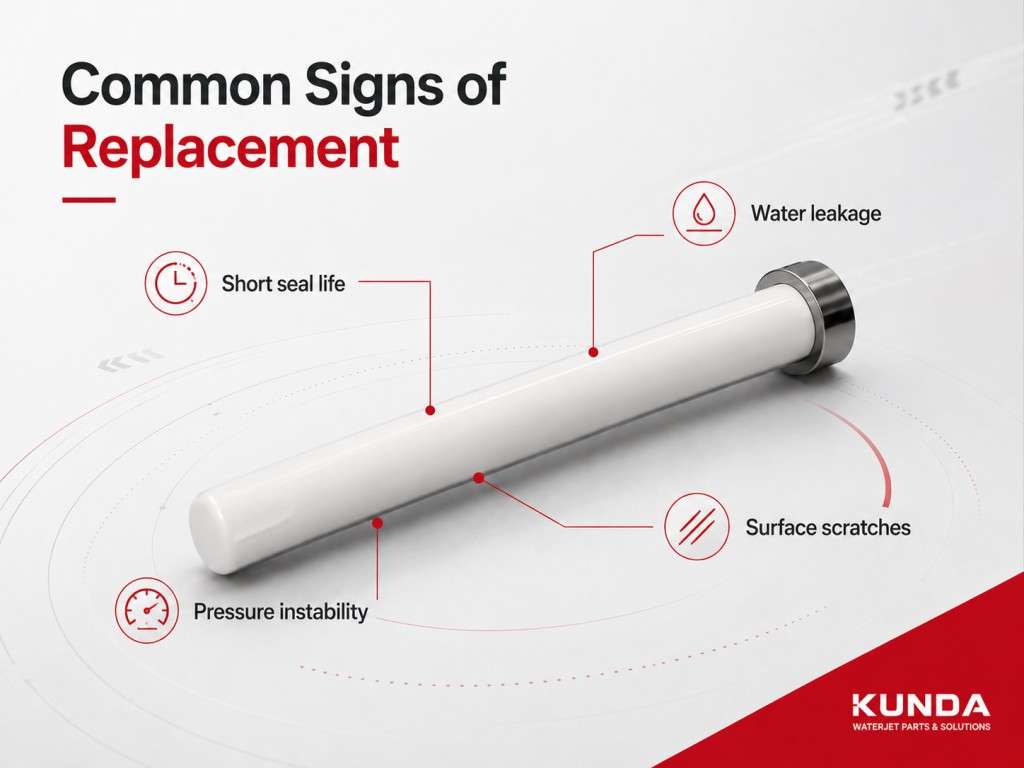
Many users of Water Jet Equipment frequently replace seal assemblies, yet the seals continue to wear out rapidly. In some cases, the root cause is not the seal itself, but a damaged ceramic plunger.
Scratches, cracks, wear, or contamination on the ceramic plunger can quickly damage newly installed seals, leading to recurring leaks, pressure instability, and equipment downtime.
Why Is the Ceramic Plunger Important?
A smooth ceramic plunger surface facilitates the proper functioning of the seal assembly, thereby ensuring stable pump pressure, extending seal service life, enhancing cutting performance, and reducing maintenance costs.If the surface of the ceramic plunger is damaged, the seal assembly may fail prematurely, even if it has been replaced with a new one.
Therefore, it is essential for customers to inspect the condition of the ceramic plunger when replacing high-pressure seals.
Common Signs That the Ceramic Plunger Needs Replacement
1. Premature wear of seal assemblies
If a failure recurs shortly after replacing the seals, inspect the ceramic plunger. Scratches or surface roughness on the plunger can damage the seals during operation.In such cases, simply replacing the seal assembly may not resolve the issue.
2. Persistent water leakage
Leakage can result from seal wear, improper installation, or worn pump components. However, if leakage reappears soon after installing new seals, the ceramic plunger may be damaged.Damage to the plunger impairs the proper functioning of the seals.
3. Unstable pump pressure
If pump pressure drops or fluctuates during cutting, inspect the ceramic plunger, check valve components, accumulator, and water supply system in addition to the seals.Pressure instability can compromise cutting quality and increase maintenance costs.
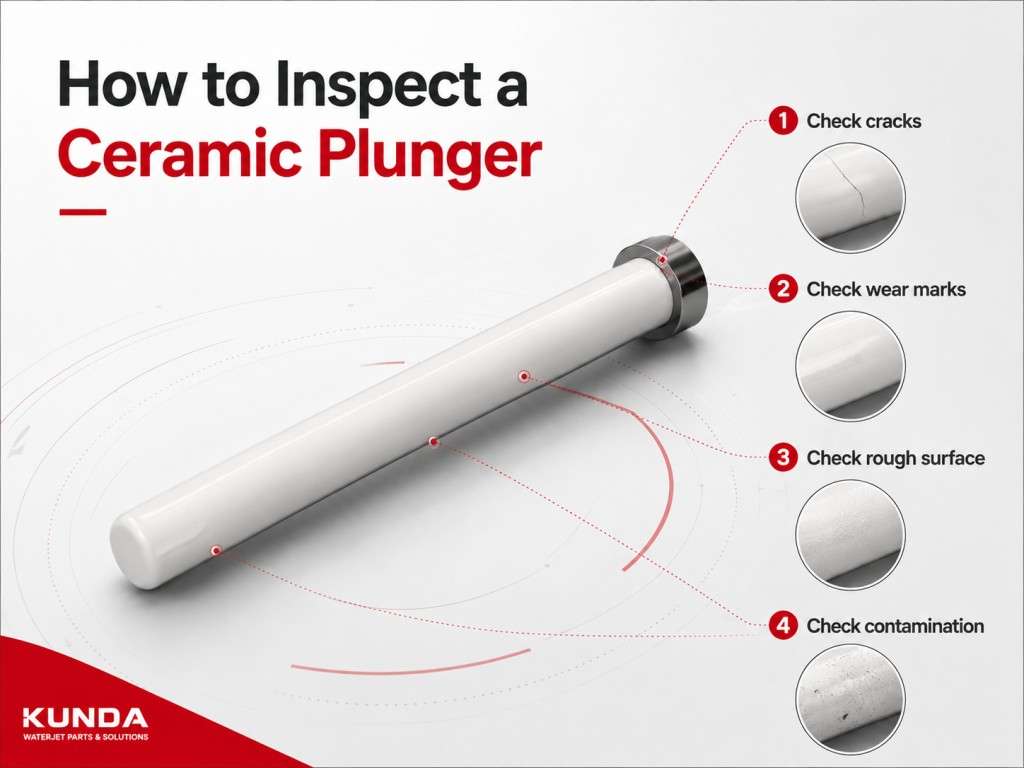
4. Visible scratches or cracks
The surface of the ceramic plunger should be smooth and clean. Replace the plunger if scratches, grooves, cracks, chipping, or rough areas are detected.Under high-pressure operating conditions, even minor surface damage can shorten the service life of the seals.
Why Does a Ceramic Plunger Get Damaged?
Common causes include poor water quality, dirty filters, improper seal installation, prolonged operation, and inadequate maintenance.Water containing sand, rust, or hard particles can scratch the ceramic surface; improper seal installation can also cause abnormal friction, damaging the plunger.
To extend the service life of the plunger, customers should ensure the inlet water is clean, replace filters on schedule, use the correct seal kits, and keep the maintenance area tidy.
Should You Replace the Seal Kit and Ceramic Plunger Together?
That is not necessarily always the case.If the ceramic plunger surface is smooth and in good condition, the customer may only need to replace the seal kit.
However, if the plunger shows scratches, cracks, or signs of wear, it is best to replace both the ceramic plunger and the seal kit. Doing so helps minimize recurring leaks and improves the pump's operational stability.
How KUNDA Can Help?
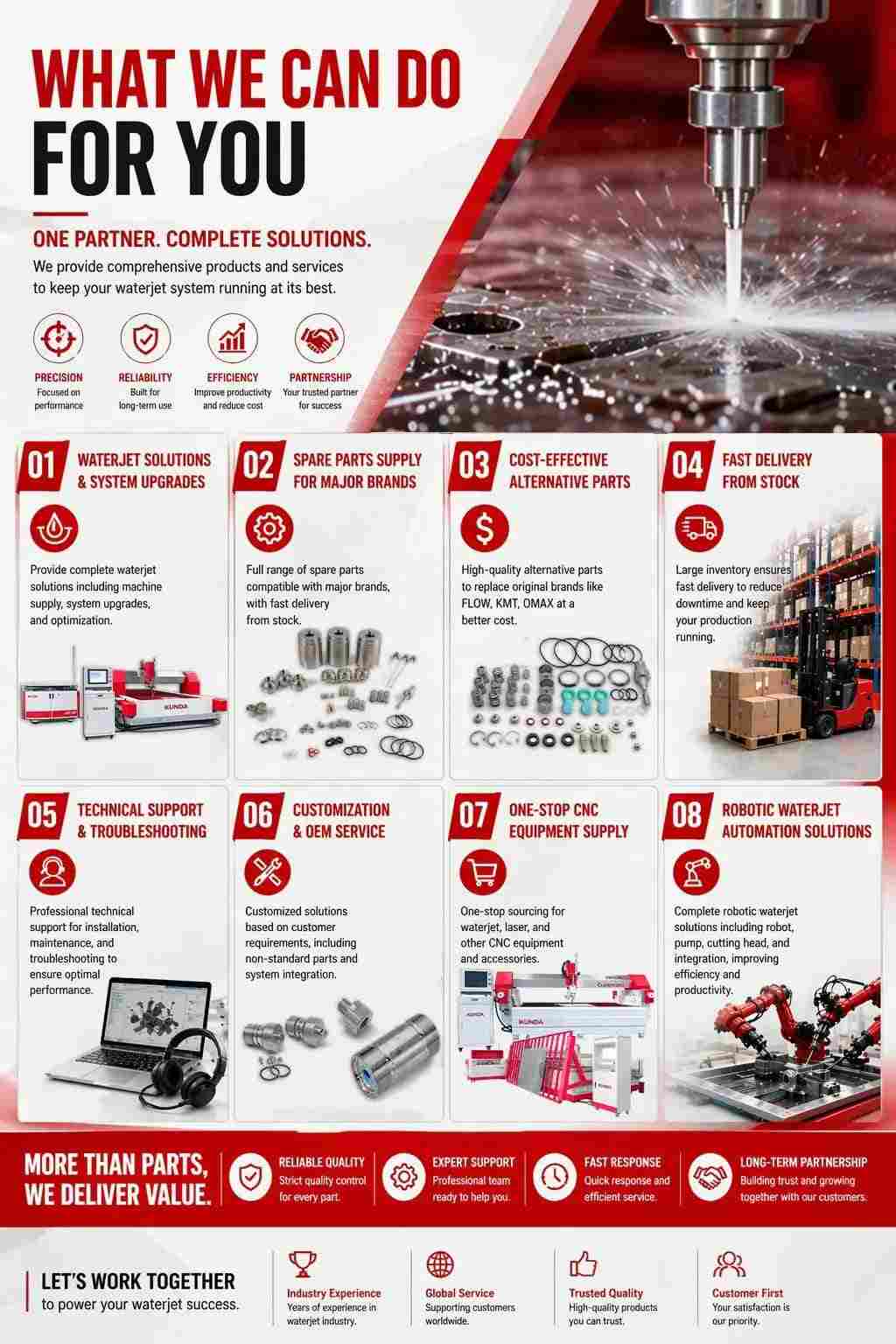
KUNDA offers waterjet ceramic plungers, ceramic rods, high-pressure seals, seal assemblies, check valve components, accumulators, filters, nozzle jewels, Focusing Tubes, and other Waterjet Pump accessories.We also supply compatible replacement parts for waterjet systems from major brands, including FLOW, KMT, OMAX, AccuStream, BFT, WSI, Resato, and Techni.
If you are unsure of the specific ceramic plunger model required, please provide the following information:
Pump brand
Pump model
Part number
Photo of the old part
Equipment nameplate
Operating pressure
Description of the current issue
KUNDA will assist in identifying the correct replacement parts and provide practical maintenance advice.
Ceramic plungers are critical components of high-pressure Waterjet Pumps. Damage to the plunger can rapidly shorten the service life of seals and lead to leaks, pressure instability, and equipment downtime.
We recommend inspecting the ceramic plunger whenever replacing high-pressure seals; if scratches, cracks, or signs of wear are detected, the plunger should be replaced immediately.
For waterjet ceramic plungers, seal assemblies, or pump maintenance parts, please contact KUNDA with the pump model, part number, or a photo of the old part, and we will help you find the right replacement solution.
FAQ:
1. What is the function of a high-pressure water jet ceramic plunger?
It works in conjunction with high-pressure seals to help maintain pump pressure and prevent leakage.2. When should the ceramic plunger be replaced?
It should be replaced if there are scratches, cracks, edge chipping, surface roughness, or frequent seal failures.3. Will a damaged ceramic plunger shorten the service life of the seals?
Yes. A damaged plunger will rapidly cause new seals to wear out and fail.4. Should the ceramic plunger be inspected when replacing seals?
Yes. This is crucial. If the plunger is damaged, the new seals may fail prematurely.5. Can KUNDA assist with matching ceramic plungers?
Yes. Customers can provide the pump model, part number, photos of the old part, or equipment nameplate information, and KUNDA will assist in identifying the correct replacement part.