Waterjet Knowledge
What Are the Fault Symptoms and Solutions for Waterjet Accumulators?
What Are the Fault Symptoms and Solutions for Waterjet Accumulators?
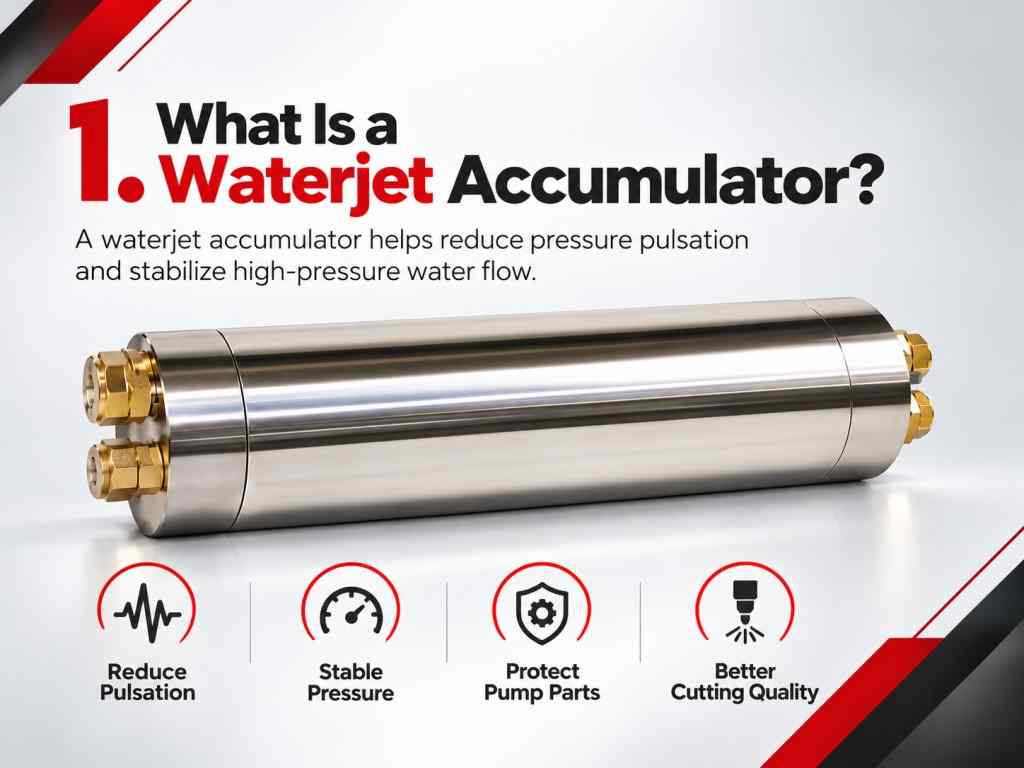
The waterjet accumulator is a critical component of the high-pressure Waterjet Cutting Pump; its primary function is to dampen pressure pulsations, ensuring a stable cutting jet.
When the accumulator operates correctly, the cutting process is smoother and the cut quality more consistent;
Conversely, a malfunction in the accumulator can destabilize the entire waterjet system.
Familiarity with common failure symptoms and their solutions helps minimize downtime and prevents unnecessary damage to other pump components.
What is the function of a waterjet accumulator?
During the Waterjet Cutting Process, the high-pressure pump continuously generates pressure. An accumulator helps absorb pressure fluctuations, stabilizing the high-pressure water flow before it reaches the cutting head.
A high-performance accumulator helps to:
Improve the stability of the cutting jet
Reduce pump vibration
Enhance cutting quality
Protect high-pressure pump components
Mitigate sudden pressure surges
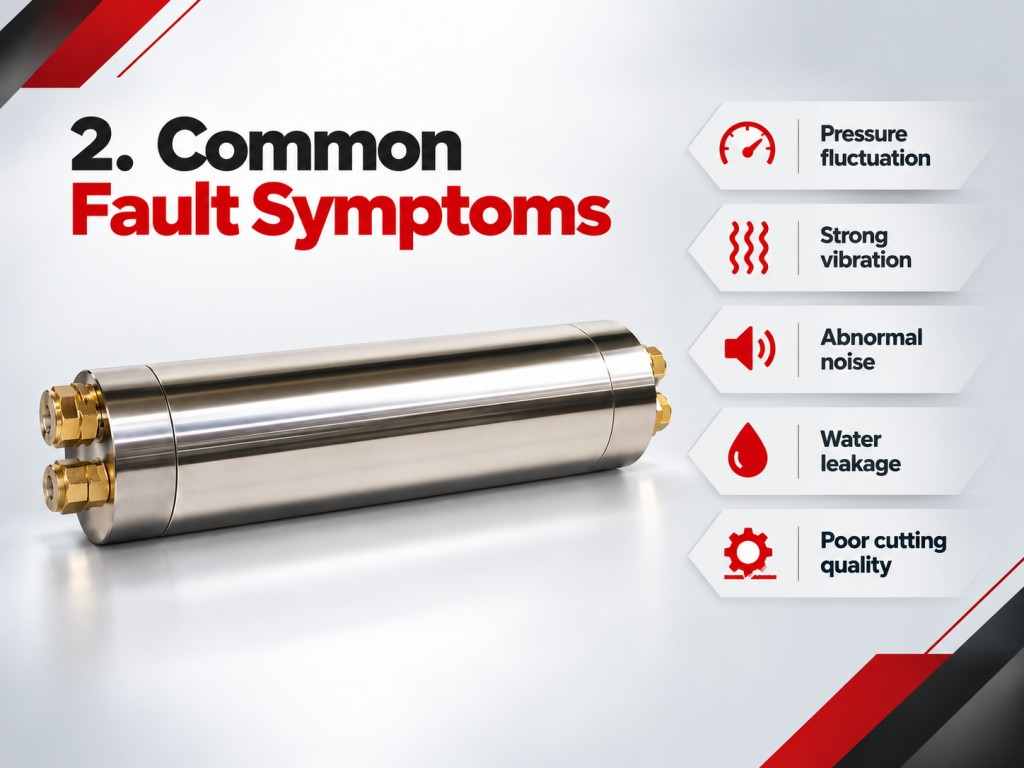
Common Fault Symptoms of Waterjet Accumulators
1. Pressure fluctuations
2. Severe pump vibration
3. Abnormal noise
4. Poor cutting quality
5. Water leakage around the accumulator
6. Visible damage or cracks
Common causes of accumulator failure
Waterjet accumulator failures are typically caused by the following factors:
Prolonged operation
Pressure surges
Poor water quality
Mismatched pressure ratings
Loose high-pressure fittings
Improper installation
Internal contaminants
Excessive pressure pulsation due to worn pump components
Lack of regular inspection
In many cases, accumulator failure is not an isolated issue; it may be linked to check valve wear, seal failure, unstable water supply, or improper pump maintenance.
Solutions for Waterjet Accumulator Malfunctions
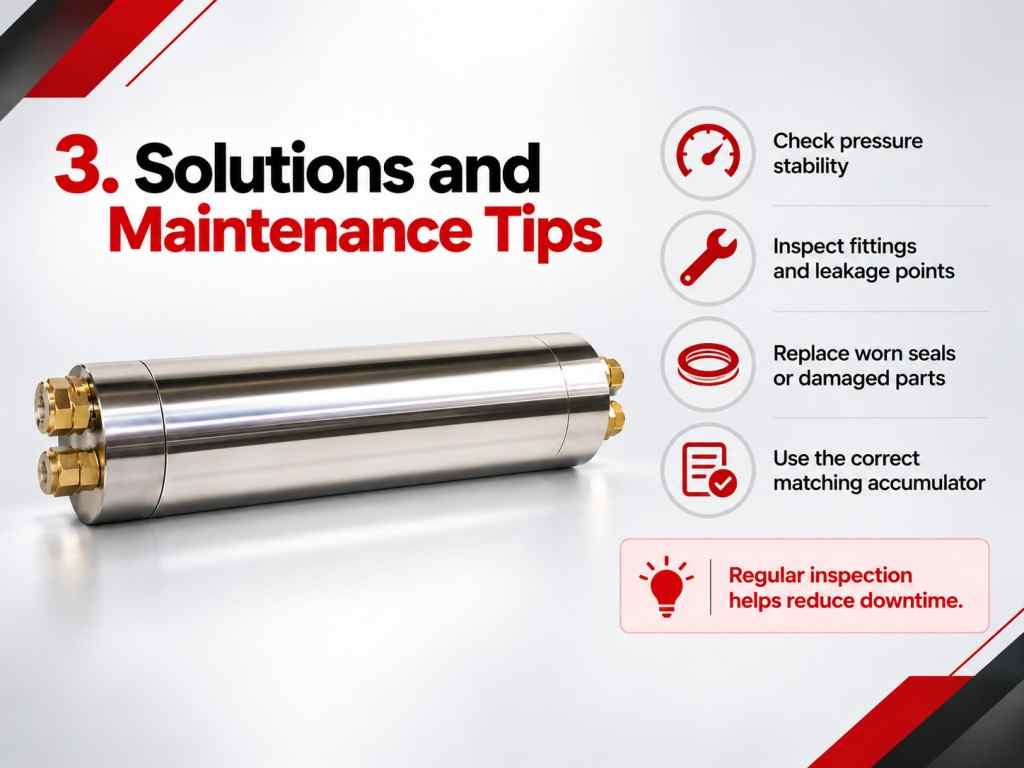
1. Check pressure stability
First, observe the pump pressure while the equipment is running.
If pressure fluctuates significantly, check the condition of the accumulator, as well as the check valve assembly, high-pressure seals, ceramic plungers, and water supply.
Do not replace the accumulator without first inspecting the relevant pump components.
2. Check for leaks
If a leak appears around the accumulator, shut down the machine and relieve the pressure first.
Then, inspect the following:
High-pressure fittings
Threaded connections
Seals
Pipeline connections
Accumulator surface
Relevant high-pressure piping
Promptly replace any damaged seals, fittings, or piping.
3. Conduct a comprehensive pump inspection
Symptoms of accumulator failure may resemble those of other pump malfunctions.
Inspect:
Check valve assembly
High-pressure seal assembly
Ceramic plungers
High-pressure cylinder
Water filter
Hydraulic system
Nozzle (jewel orifice) and Mixing Tube
A thorough inspection helps identify the root cause and prevents the replacement of incorrect parts.
4. Replace the accumulator when necessary
The accumulator should be replaced if it shows cracks, severe wear, body leakage, or an inability to maintain stable pressure.
Select an accumulator that matches the following specifications:
Pump model
Operating pressure
Connection type
Equipment brand
System requirements
Installation dimensions
Using an incompatible accumulator may lead to installation issues, pressure instability, leaks, or safety hazards.
5. Enhance routine maintenance
To minimize accumulator failures:
Keep the water supply clean
Replace filters on schedule
Avoid prolonged operation at full load
Regularly inspect high-pressure fittings
Monitor pipeline vibration
Promptly replace worn pump components
Maintain accurate pump maintenance records
Proper maintenance helps extend the service life of the accumulator and other Waterjet Pump components.
How KUNDA Supports Customers?
KUNDA supplies waterjet accumulators, pump assemblies, cutting head assemblies, consumables, and compatible replacement parts to customers worldwide.
Our product range includes:
Waterjet accumulators
High-pressure seal kits
Check valve assemblies
Ceramic plungers
High-pressure cylinders
Intensifier assemblies
Valve assemblies
Filters
High-pressure tubing and fittings
Nozzles (jewel orifices) and mixing tubes
Maintenance tools
KUNDA helps customers identify the correct parts based on pump models, part numbers, photos of old parts, equipment nameplates, operating pressures, and descriptions of malfunctions.
If you encounter issues such as pressure fluctuations, leaks, abnormal noises, or vibrations with your waterjet accumulator, you can send us photos or videos. KUNDA will assist in troubleshooting the problem and provide practical replacement solutions.
KUNDA provides reliable waterjet accumulator replacement parts and technical support, helping customers minimize downtime and ensure smooth equipment operation.
FAQ of waterjet accumulator:
1. What is the function of a waterjet accumulator?
The waterjet accumulator helps reduce pressure pulsations, ensuring a more stable high-pressure water stream during the cutting process.
2. What are the common signs of accumulator failure?
Common signs include pressure fluctuations, severe pump vibration, abnormal noise, an unstable cutting jet, poor cutting quality, and water leakage.
3. Can accumulator failure lead to reduced cutting quality?
Yes. If the pressure is unstable, the cutting jet can also become unstable, resulting in rough cut edges, wider kerfs, and inconsistent cutting quality.
4. Should a damaged accumulator be repaired?
If the accumulator body shows cracks, deformation, or severe damage, replacement is recommended. High-pressure components should not be repaired casually, as this can create safety hazards.
5. Can KUNDA assist in matching waterjet accumulators?
Yes. Customers simply need to provide information such as the pump model, part number, photos of the old part, the equipment nameplate, and the operating pressure. KUNDA will assist in identifying the appropriate accumulator and related pump accessories.