
Waterjet Solutions
How Do You Choose Abrasives For Waterjet Cutting Machine?
How Do You Choose Abrasives For Waterjet Cutting Machine?
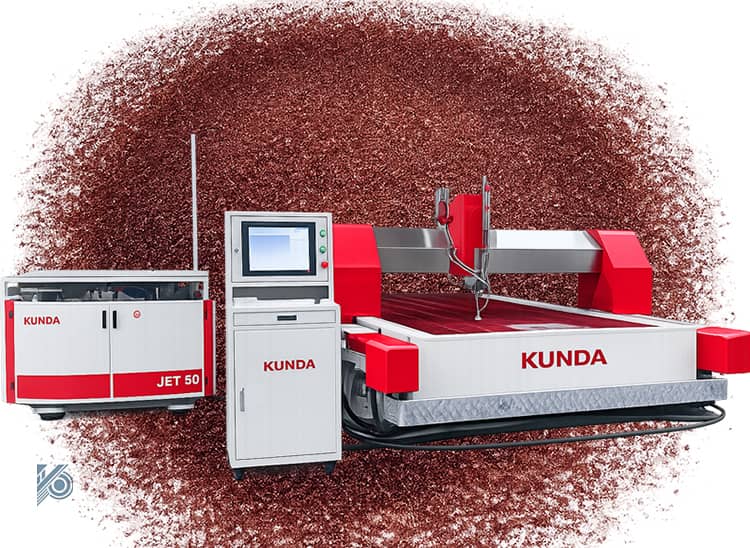
In modern industrial manufacturing, where superior cutting performance is a constant pursuit, waterjet cutting technology has emerged as an ideal solution for processing a wide range of materials, thanks to its unique cold-cutting characteristics. However, to fully unlock the potential of a waterjet system and achieve the desired cutting efficiency and finished product quality, focusing solely on the power output of the Intensifier Pump and the precision of the cutting head is far from sufficient.
In fact, as an indispensable component of the high-pressure waterjet process, the abrasive plays a role as critical as the sharpness of a blade. Its proper selection directly and profoundly impacts overall cutting performance. Especially when dealing with hard and demanding materials such as alloy steel, wear-resistant ceramics, thick granite, and fragile precision glass, the physical properties, particle size distribution, and purity of the abrasive are key factors influencing cutting speed, edge quality, and overall operational cost.
Given the central role abrasives play in the Waterjet Cutting Process, selecting the most suitable abrasive for specific applications becomes a crucial topic for both operators and decision-makers. This article is designed to address that exact need.
We will begin by introducing the fundamental types of abrasives, followed by a detailed analysis of the characteristics and application ranges of different abrasive materials. Next, we will explore how abrasive particle size significantly affects cutting performance and explain how to match it with specific processing requirements. Furthermore, we will examine the intrinsic quality standards of abrasives and how these parameters influence both cutting efficiency and equipment maintenance. Finally, we will provide practical selection guidelines based on different materials and real-world application scenarios.
Our goal is to offer a systematic and comprehensive guide to help you optimize your waterjet cutting process, thereby enhancing production efficiency and strengthening your competitive advantage.
So, what exactly is a waterjet abrasive?
Simply put, it refers to fine granular materials introduced into the high-pressure water stream. Under extremely high velocity, these particles are accelerated along with the waterjet and impact the workpiece surface, generating continuous abrasive erosion that enables precise cutting of various hard materials.
This process is purely physical, eliminating thermal stress and ensuring the integrity and performance of the material being cut. In this context, abrasives act like “countless micro-cutting edges,” where each particle, with its inherent hardness and sharpness, continuously removes material. This is the fundamental mechanism that allows waterjet cutting to effectively process hard materials.
Currently, in Industrial Waterjet applications, the most widely used and highly recommended abrasive is:
Garnet Abrasive
Due to its naturally formed crystalline structure, garnet offers high hardness, high density, and excellent cutting efficiency. As a result, it is widely regarded as the preferred material for industrial-grade waterjet cutting. Its outstanding performance enables reliable and efficient operation across a broad range of complex cutting tasks.
In the following sections, we will take a closer look at several common types of waterjet abrasives, providing an in-depth analysis of their properties and application suitability.
1. Garnet — The Mainstream Choice in Today’s Market
Garnet is undoubtedly the most widely used abrasive in the global waterjet cutting industry. Its dominant position is attributed to a series of outstanding performance advantages.
First, garnet offers relatively high hardness, typically ranging between 7 and 8 on the Mohs scale. This level of hardness ensures that the abrasive maintains its sharp cutting edges under high-velocity impact, enabling effective penetration and material removal across a wide range of hard materials. As a result, overall cutting efficiency is significantly improved, allowing production lines to operate at higher speeds and reducing processing time.
Second, garnet generates relatively low dust during the cutting process. This not only improves workplace air quality and reduces potential respiratory risks for operators, but also simplifies post-processing cleanup. From an environmental perspective, low-dust abrasives are increasingly important as regulations become more stringent, making garnet a sustainable choice for modern manufacturing operations.
In addition, garnet causes comparatively less wear on critical waterjet components such as nozzles and Mixing Tubes. This moderate wear characteristic helps extend the service life of these key parts, reducing maintenance frequency and lowering replacement costs. Consequently, it contributes to reduced long-term operating expenses.
In summary, due to its well-balanced performance, garnet is suitable for nearly all types of waterjet cutting applications. Whether processing tough metals, thick stone materials, or delicate glass products requiring precision, garnet delivers stable, efficient, and reliable cutting performance.
2. Aluminum Oxide
Aluminum oxide abrasives demonstrate their value in specific high-intensity cutting applications due to their unique performance characteristics.
Their primary advantage lies in their higher hardness compared to garnet, along with stronger cutting capability. This allows aluminum oxide to deliver superior penetration and material removal rates when dealing with extremely hard or difficult-to-machine materials, potentially achieving faster cutting speeds in certain demanding applications.
However, these advantages come with notable trade-offs. Due to its extreme hardness and angular particle structure, aluminum oxide significantly accelerates wear on critical waterjet components, particularly nozzles and mixing tubes. This increased wear leads to more frequent replacement of these parts, resulting in higher maintenance costs and increased downtime. Moreover, the material cost of aluminum oxide itself is higher than that of garnet.
Therefore, aluminum oxide is typically reserved for specialized applications where exceptional cutting power is required and where increased wear and cost can be justified. In most general-purpose waterjet cutting operations, its higher overall operating cost often makes it a less economical choice.
3. Silica Sand (Not Recommended)
Although silica sand was historically considered by some users due to its low cost, it has largely been phased out in modern waterjet cutting applications because of several significant drawbacks. We strongly do not recommend using this abrasive.
First, silica sand delivers relatively poor cutting efficiency. Compared to professional abrasives such as garnet, it has lower hardness and weaker cutting performance, resulting in slower cutting speeds. This makes it difficult to meet the productivity demands of modern industrial manufacturing, leading to longer processing times and reduced overall output.
Second, silica sand generates a large amount of dust during operation, much of which contains crystalline silica. Inhalation of this dust poses serious health risks to operators and can lead to irreversible respiratory diseases such as silicosis. In today’s environment, where occupational health and safety standards are increasingly stringent, the use of silica sand represents an unacceptable risk.
Furthermore, the particle shape and purity of silica sand are often inconsistent and suboptimal. This increases the likelihood of clogging within the waterjet system, particularly in critical components such as the nozzle and mixing tube. Blockages not only interrupt production and increase maintenance workload but may also cause damage to the equipment.
Given these disadvantages, silica sand has been largely eliminated from modern waterjet cutting practices by professional users. For operations that prioritize efficiency, safety, and stability, this abrasive should be avoided.
How to Choose the Right Abrasive Mesh Size?
Abrasive mesh size (particle size) is another critical parameter that directly influences waterjet cutting performance. It plays a decisive role in determining cutting speed, surface finish, and edge precision. Selecting the appropriate mesh size is therefore a key step in optimizing the overall cutting process.Common Abrasive Mesh Sizes in the Market
The most commonly used abrasive mesh sizes in the current market are as follows:
60 Mesh (Coarse Grade):
This type of abrasive features larger particles, which deliver stronger impact energy during cutting. As a result, it enables faster material removal and significantly improves cutting speed. It is particularly suitable for processing thicker materials where surface finish is not a primary concern, such as heavy steel plates or large stone slabs.
80 Mesh (Standard Grade):
This is the most widely used mesh size in the waterjet cutting industry. 80 mesh abrasives offer an excellent balance between cutting speed and cutting quality. They provide sufficient efficiency while maintaining a relatively smooth and consistent edge finish, making them suitable for the majority of general-purpose waterjet applications.
120 Mesh (Fine Grade):
With smaller particle size, 120 mesh abrasives produce finer impact marks during cutting, effectively reducing surface roughness and delivering a smoother, more precise finish. This makes them ideal for high-precision applications where edge quality is critical, such as aerospace components, artistic cutting, or glass finishing.
Recommended Mesh Selection Based on Application
Based on different processing requirements, the following guidelines are recommended:For high-speed cutting of thick materials:
Coarser abrasives (60–80 mesh) should be prioritized. Larger particles provide stronger cutting force and higher material removal rates, ensuring efficient processing.
For precision cutting and superior surface finish:
Finer abrasives (80–120 mesh) are more suitable. Smaller particles reduce impact damage on the material, resulting in cleaner, smoother edges.
For general-purpose applications:
We strongly recommend using 80 mesh garnet abrasive. It offers a well-balanced performance in terms of efficiency and quality, making it the optimal choice for stable and cost-effective production across a wide range of materials and cutting tasks.
Impact of Abrasive Quality on Cutting Performance
The intrinsic quality of abrasives is far more critical than their apparent size or type. It directly affects the operational stability of the waterjet system, equipment maintenance costs, and the final cutting quality.High-quality abrasives typically exhibit the following characteristics:
Excellent particle uniformity
Each particle is consistent in size and shape. Uniform particles ensure a stable and continuous cutting force within the waterjet stream, preventing uneven cutting or energy dispersion caused by inconsistent particle sizes.
Low dust (fines) content
Excessive fines not only contaminate the working environment but also reduce effective cutting capability and increase the risk of system clogging. Low dust content ensures higher efficiency and cleaner operation.
Minimal impurities
Impurities such as metal fragments or stones can degrade cutting performance and potentially damage or block critical components like nozzles and mixing tubes. High-purity abrasives help protect equipment and extend service life.
Good flowability
Proper flow characteristics ensure smooth delivery of abrasives from the hopper to the cutting head, preventing interruptions caused by clogging or inconsistent feeding.
Conversely, the use of low-quality abrasives may result in several negative outcomes:
- Unstable cutting performance, leading to burrs, delamination, or uneven edges
- Frequent clogging of nozzles and mixing tubes, causing downtime and maintenance issues
- Significantly reduced lifespan of mixing tubes, increasing spare part costs
- Poor surface finish, potentially requiring additional post-processing and raising overall production costs
Relationship Between Abrasive Flow Rate and Cutting Efficiency
Abrasive consumption, typically measured in kilograms per minute (kg/min), is directly linked to waterjet cutting efficiency. Proper control of abrasive flow rate is crucial for balancing performance and cost.When the abrasive flow rate is too low, there are insufficient particles in the water stream to effectively perform cutting. This results in reduced cutting capability, slower material removal, and in some cases, failure to fully penetrate thick materials. Although it may appear to save abrasive, it significantly reduces efficiency and may lead to incomplete cuts or defects—ultimately increasing total production costs.
On the other hand, when the abrasive flow rate is too high, cutting speed may improve to some extent, but with diminishing returns. Excessive abrasive leads to unnecessary material waste, as not all particles effectively contribute to cutting. Moreover, overly dense abrasive concentration can disrupt the waterjet flow, potentially reducing cutting efficiency. It also accelerates wear on system components, further increasing operating costs.
In practice, operators must identify an optimal balance point—an ideal abrasive flow rate that maximizes cutting efficiency while minimizing consumption. Achieving this requires a combination of testing, parameter optimization, and a solid understanding of material properties, cutting speed, and quality requirements.
Abrasive Selection Recommendations for Different Materials
Selecting the appropriate abrasive type and mesh size based on the material being processed is essential for achieving optimal cutting results.Metal Cutting (Steel, Stainless Steel, Aluminum, etc.)
We recommend using 80 mesh garnet abrasive. This provides an ideal balance between cutting power and surface finish. It ensures efficient penetration of tough metals while maintaining relatively smooth edges and minimizing burr formation. Its versatility makes it the preferred choice for most metal cutting applications.
Stone and Slab Cutting
For materials such as granite, marble, and engineered stone, 60–80 mesh garnet is recommended. These materials are typically thick and hard, and coarser abrasives provide stronger impact energy and higher material removal rates. This improves cutting speed and overall productivity, especially for large-scale or high-volume operations.
Glass and Precision Materials
For applications requiring superior edge quality, such as glass or precision components, 100–120 mesh fine garnet is recommended. Finer particles reduce impact intensity, minimizing edge chipping and micro-cracking. This ensures smoother, cleaner cuts that meet strict quality standards.
Composite Materials (Carbon Fiber, Fiberglass, etc.)
For composite materials, high-quality 80 mesh garnet is the optimal choice. Due to the layered structure of composites, improper cutting can lead to delamination or fiber pull-out. High-quality abrasives with uniform particles and low impurities help maintain structural integrity, reduce damage, and ensure clean, precise cuts.
How to Reduce Abrasive Consumption Costs
In practical waterjet cutting operations, abrasive costs often represent a significant portion of total expenses. Therefore, optimizing abrasive usage through scientific management and strategic selection is essential for reducing overall operating costs. The following methods have proven to be effective:1. Use High-Quality Garnet Abrasives
Although high-quality abrasives may have a slightly higher upfront cost, they deliver substantial long-term savings. Premium garnet features uniform particle size, high purity, and excellent flowability, enabling more efficient cutting and reducing ineffective abrasive consumption. In addition, it minimizes wear on critical components such as nozzles and mixing tubes, extending their service life and lowering replacement frequency and maintenance costs.
2. Optimize Abrasive Flow Rate Precisely
As discussed earlier, excessive abrasive leads to waste, while insufficient flow reduces cutting efficiency. By conducting detailed testing under different materials and cutting conditions, operators can determine the optimal abrasive flow rate for each application. This ensures maximum efficiency without compromising cut quality. Achieving this requires both operational experience and careful adjustment based on machine performance characteristics.
3. Maintain the Abrasive Delivery System Regularly
Routine maintenance of the abrasive feeding system is essential. This includes inspecting hoppers, feed lines, metering devices, and mixing chambers to ensure there are no blockages, leaks, or irregularities. Poorly maintained systems can result in inconsistent feeding, inaccurate dosing, or material loss, all of which lead to unnecessary waste and downtime. Regular cleaning and inspection ensure stable and efficient operation.
4. Establish Reliable Supplier Partnerships
Working with reputable suppliers who offer consistent quality, stable supply, and competitive pricing ensures uninterrupted production and reliable abrasive performance. Long-term partnerships can also provide better pricing advantages and supply stability, especially during market fluctuations.
Future Trends: High Efficiency and Eco-Friendly Abrasives
With increasing global emphasis on environmental protection and cost control, waterjet abrasive technology is evolving toward higher efficiency and sustainability. These trends are reshaping selection criteria and becoming key competitive factors for manufacturers.1. Recyclable Abrasive Technology
Traditionally, used abrasives are treated as waste, increasing disposal costs and environmental burden. Recyclable abrasive technologies aim to clean, classify, and regenerate used abrasives through physical or chemical processes, allowing them to be reused. Once widely adopted, this approach can significantly reduce long-term abrasive costs and minimize waste generation, improving the sustainability of waterjet operations.
2. Low-Dust Eco-Friendly Abrasives
Although garnet is already relatively environmentally friendly, the industry continues to develop abrasives that generate even less dust. These low-dust solutions improve workplace conditions, reduce health risks for operators, and help companies comply with increasingly strict environmental regulations. This also contributes positively to corporate image and employee well-being.
3. High-Efficiency Specialized Abrasives
As advanced materials and composites become more common, the demand for specialized abrasives continues to grow. These abrasives are engineered with optimized crystal structures, particle distributions, or surface treatments to match specific material properties. The goal is to achieve higher cutting speeds, improved edge quality, and extended component lifespan. Such innovations will expand the application range of waterjet technology and address more complex cutting challenges.
Looking ahead, abrasive selection will no longer be a purely technical consideration affecting cutting performance. It will become a strategic factor influencing cost control, environmental compliance, and technological competitiveness. Companies that proactively adopt these advancements will gain a clear advantage in the market.
In summary, selecting the right waterjet abrasive is a critical factor in achieving high cutting quality, improving production efficiency, and effectively controlling operating costs.
By comprehensively evaluating abrasive type, mesh size, and intrinsic quality, manufacturers can significantly optimize their production processes, ensure superior product quality, and realize substantial long-term cost savings.
For every waterjet operator, understanding and selecting the appropriate abrasive is not merely a technical decision—it is a strategic element that directly impacts process stability, product performance, and overall cost efficiency. A well-informed abrasive choice is the foundation for maximizing the full potential of waterjet cutting technology.


