Waterjet Knowledge
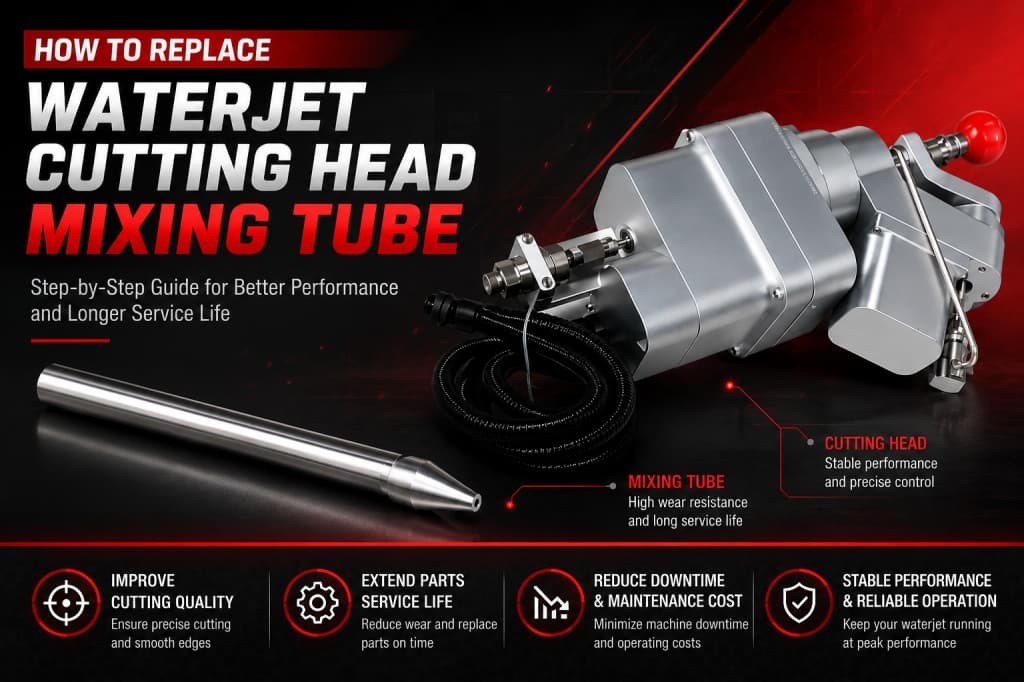
How to Replace a Waterjet Cutting Head Mixing Tube?
How to Replace a Waterjet Cutting Head Mixing Tube?
Waterjet cutting pipe replacement practical operation video
The mixing tube, also called the Abrasive Nozzle or sand tube, is one of the most important wear parts in a waterjet cutting head.
After long-term use, the inner hole of the mixing tube gradually becomes larger due to the continuous impact of abrasive and high-pressure water. This directly affects cutting accuracy, cutting efficiency, and abrasive consumption.
In this guide, we demonstrate the basic process of replacing a waterjet cutting head mixing tube and share several important maintenance tips for waterjet users.
Why Does the Mixing Tube Need Regular Replacement?
During waterjet cutting, abrasive particles continuously pass through the mixing tube at extremely high speed. Over time, this causes internal wear and nozzle enlargement.
When the mixing tube becomes worn, customers may notice:
- Cutting accuracy decreases
- Kerf becomes wider
- Cutting surface quality becomes rough
- Cutting speed becomes slower
- Abrasive consumption increases
- Waterjet stream becomes unstable
Replacing the worn mixing tube in time helps maintain stable cutting performance and reduces unnecessary operating costs.
Basic Steps to Replace the Waterjet Mixing Tube
1. Stop the Machine and Release Pressure
Before replacing any waterjet cutting head parts, make sure:
- The machine is completely stopped
- High pressure is fully released
- Water supply is turned off
Safety should always come first during maintenance.
2. Remove the Old Mixing Tube
Carefully loosen the nozzle retaining nut or cutting head cap.
Then remove the worn mixing tube from the cutting head assembly.
During removal, inspect the following parts:
- Mixing chamber
- Orifice
- Nozzle nut
- Internal sealing surfaces
If there is abrasive buildup or visible damage, clean or replace related parts if necessary.
3. Install the New Mixing Tube
Insert the new mixing tube carefully and ensure correct alignment with the orifice.
Improper alignment may cause:
- Short nozzle life
- Poor cutting quality
- Internal damage to the cutting head
After installation:
- Tighten the nozzle nut correctly
- Avoid overtightening
- Ensure the assembly is stable
4. Test the Waterjet Cutting Head
After replacement:
- Start low-pressure water flow first
- Check for leakage
- Observe waterjet alignment
- Perform a cutting test
If the water stream is stable and cutting quality returns to normal, the replacement is completed successfully.
Tips to Extend Mixing Tube Service Life
To reduce wear and extend nozzle life:
- Use high-quality abrasive
- Keep abrasive dry and clean
- Maintain stable water pressure
- Replace worn orifices in time
- Avoid improper alignment during installation
Regular maintenance helps reduce downtime and improve overall production efficiency.

Common Signs Your Mixing Tube Needs Replacement
Many waterjet users continue using worn mixing tubes for too long, which can increase abrasive consumption and reduce cutting quality.
Common warning signs include:
- Unstable waterjet stream
- Poor edge quality
- Reduced cutting precision
- Faster abrasive usage
- Visible enlargement inside the mixing tube
Regular inspection of waterjet consumables helps maintain stable production performance and avoid unexpected downtime.
KUNDA Waterjet Spare Parts Support
KUNDA supplies compatible waterjet spare parts for many major brands, including:
- FLOW
- KMT
- OMAX
- AccuStream
- BFT
- Techni
- Resato
- WSI
We can provide:
- Mixing tubes
- Orifices
- Cutting head parts
- On/off valve parts
- High-pressure pump parts
- Waterjet maintenance solutions
KUNDA focuses on providing cost-effective compatible waterjet spare parts, fast delivery support, and professional technical solutions for global waterjet users.
Contact KUNDA
If you need waterjet spare parts, mixing tubes, cutting head components, or technical maintenance support, please feel free to contact KUNDA for more information.
Email: info@kundacnc.com
WhatsApp: +86 157 9367 0759